20 Years Later, The Makeup from The Devil Wears Prada Still Holds Up
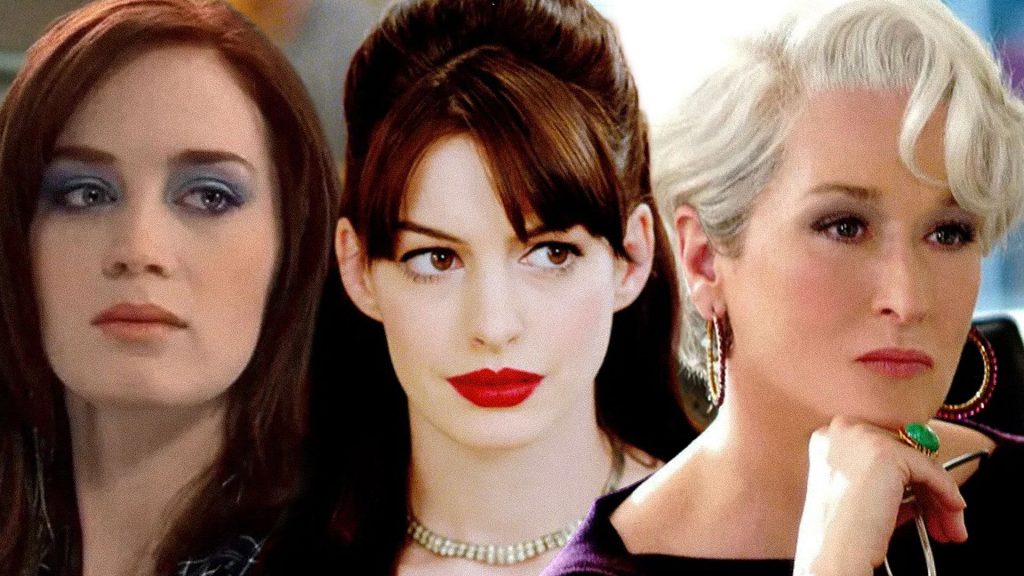
Are you an Emily, Andy, or Miranda? Nicki Ledermann, makeup department head from 2006’s The Devil Wears Prada, breaks down each character’s look—and why they remain timeless.
Beauty & Film
20 Years Later, The Makeup from The Devil Wears Prada Still Holds Up
Are you an Emily, Andy, or Miranda? A closer look at the beauty language that made the film’s characters feel timeless.
Two decades later, The Devil Wears Prada still looks startlingly current. The clothes may have become the obvious point of reference, but the makeup is what quietly holds the film together. It gives each woman a language before she even speaks. It tells us who is in control, who is trying to survive, and who is still learning how to enter the room.
The beauty in the film never feels accidental. It is polished without becoming overdone, sharp without becoming costume, and expressive without announcing itself too loudly. That restraint is exactly why it continues to work. The makeup does not scream 2006. It speaks in structure, confidence, and character.
Miranda: Power Without Excess
Miranda Priestly’s makeup is the most controlled of all. Her look is not built around trend, softness, or seduction. It is built around authority. The skin is composed, the lip is deliberate, and the overall effect is calm but unreachable. Nothing is wasted. Nothing begs for attention.
That is what makes Miranda’s look so enduring. Her beauty is not about being fashionable in the obvious sense; it is about precision. She represents a woman who understands the power of editing. Her makeup supports the image of someone who does not need to prove she belongs anywhere. The room adjusts to her.
Miranda’s face is not decorated. It is composed.
Andy: The Transformation That Still Feels Real
Andy Sachs begins the film visually outside the system. Her early makeup is quiet, almost invisible, reflecting a character who has not yet learned the codes of the world she has entered. She is not unattractive or careless; she is simply not performing for that environment.
As Andy changes, the makeup changes with her. The shift is not extreme, which is why it remains believable. A more polished complexion, a more defined eye, a more intentional finish—these choices signal adaptation rather than reinvention. The film understands that transformation is often most powerful when it is gradual.
Andy’s beauty arc still resonates because it avoids the trap of making glamour look like a personality replacement. She becomes more refined, but not erased. The makeup gives her access to the world of Runway without completely swallowing the person she was before.
Emily: The Pressure of Perfection
Emily’s look carries a different kind of tension. It is sharper, more alert, and more visibly connected to the pressure of the fashion office. Her makeup reads as someone who knows the rules and is working every second not to fall beneath them.
There is a precision to Emily that feels both stylish and anxious. Her beauty is not relaxed; it is maintained. That makes her one of the most interesting visual characters in the film. She is close to the center of power, but not protected by it. Her makeup reflects that constant state of performance.
Even today, Emily’s look feels familiar. It belongs to anyone who has ever dressed for a job that demanded more than competence. It is the face of ambition under pressure.
Why It Still Holds Up
What makes the makeup in The Devil Wears Prada timeless is that it was never chasing a beauty trend. It was chasing character. The looks are not built around a single product, color, or technique that dates the film. They are built around identity.
That is why the film continues to circulate visually. Miranda still looks powerful. Andy’s transformation still feels satisfying. Emily still looks razor-sharp and slightly exhausted. Each face tells the truth of the character’s position inside the story.
In a beauty culture now dominated by constant reinvention, the film feels almost refreshing in its discipline. It reminds us that style does not have to be loud to be memorable. Sometimes the most lasting looks are the ones that understand when to stop.
The Final Look
Twenty years later, the question remains: are you an Emily, an Andy, or a Miranda? The answer may depend less on your makeup bag and more on how you move through the world. Are you trying to enter the room, survive the room, or own it completely?
That is the quiet genius of the film’s beauty direction. It never simply paints a face. It defines a position. And in a movie about ambition, image, and power, that makes all the difference.
Libra Times — Beauty & Film