MAISON ADORÉ • DESIGNER LEGACY SERIES • 5 MIN READ
DESIGNER LEGACY • COUTURE • FASHION HISTORY
Ann Lowe
MAISON ADORÉ • DESIGNER LEGACY SERIES • 5 MIN READ
Before fashion learned to say inclusion, Ann Lowe was already dressing power.
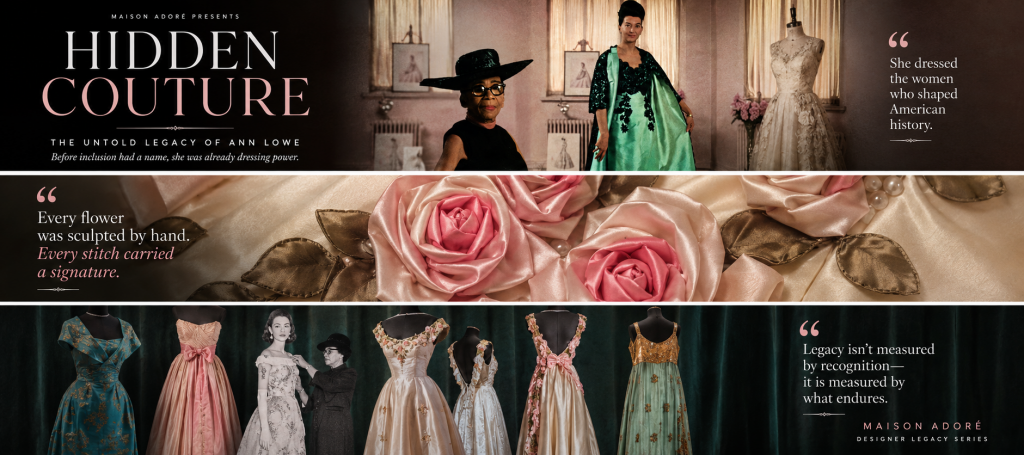
From Park Avenue ballrooms to presidential ceremonies, her gowns quietly moved through American history—hand-stitched, flowered, and sculpted—often admired without her name ever being spoken.
For decades, Ann Lowe dressed the women who defined American society, including members of the Rockefeller, Du Pont, and Roosevelt families. Yet her own legacy was too often pushed to the margins, reduced in newspaper headlines to descriptions that failed to recognize the brilliance of her work. Today, her designs stand as enduring works of couture, finally receiving the recognition they have always deserved.
Couture Built by Hand, Not Permission
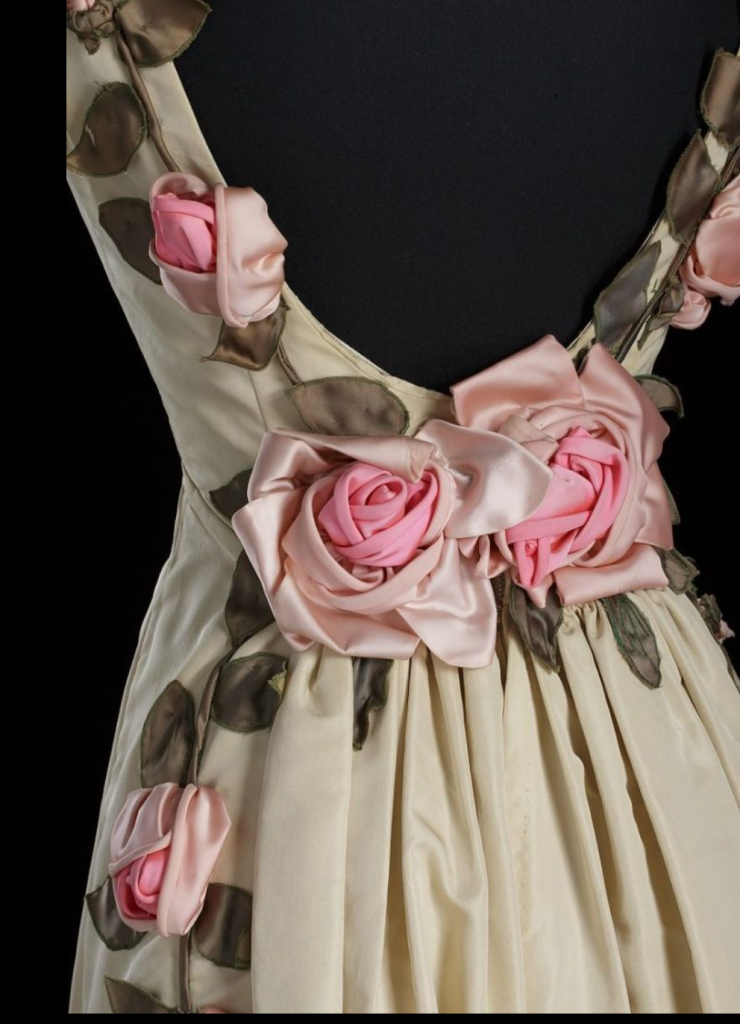
Lowe’s design language was unmistakable: romantic silhouettes, architectural volume, and signature three-dimensional floral appliqués. Every petal was individually shaped, layered, and sewn by hand, creating gowns that appeared almost weightless while showcasing extraordinary technical precision.
Her work was never about decoration alone. It reflected discipline, craftsmanship, and complete artistic control—qualities she developed long before New York recognized her extraordinary talent.
From Alabama to Manhattan
Born in Clayton, Alabama, in 1898, Ann Lowe inherited generations of dressmaking knowledge from her mother and grandmother. What began as a family tradition quickly became an exceptional artistic gift, with Lowe mastering garment construction while still a child.
In 1917, she moved to New York and enrolled at the S. T. Taylor School of Design. Although separated from her white classmates because of segregation, her abilities were so advanced that she completed the program in half the required time. Even when institutions attempted to isolate her, talent remained impossible to ignore.
The Gown That Made History
Ann Lowe’s most celebrated creation remains the ivory silk taffeta wedding gown worn by Jacqueline Bouvier when she married John F. Kennedy in 1953. Only days before the ceremony, a flood destroyed the original gown along with many of the bridesmaids’ dresses. Lowe and her team recreated every piece by hand in time for the wedding, absorbing the financial loss herself while receiving little public recognition.
Today, the gown is remembered as one of the most iconic wedding dresses in American history—a lasting symbol of craftsmanship, resilience, and artistic excellence.
— Enith Verona
Founder & Editor-in-Chief, ADORÉ
Designer Legacy Series
“Legacy doesn’t disappear when files are deleted.
It waits for the right house to rebuild it.”
“Craftsmanship outlives recognition.”